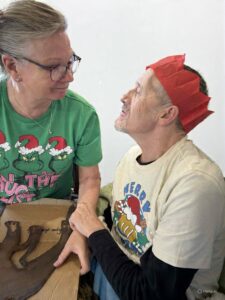
Life had sent me a curveball: Barbara’s story
After almost 24 years working as a direct care worker in the aged care and disability sector, Barbara thought she knew what the next chapter of life would look like. At 64, she was looking ahead to retirement and enjoying life with her husband, Geoff.
Then, in March 2025, life took an unexpected turn.
While camping alone near Bendigo, Geoff suffered a massive ischaemic stroke. Fortunately, other campers found him and called an ambulance. He was rushed to hospital before being transferred to the Royal Melbourne Hospital for emergency surgery.
“Life had sent me a curveball,” Barbara says. “Looking after others for so long, now I was set to give up what was my life to help restore some of my husband's.”
When everything changed
The day Geoff had his stroke, Barbara was at work.
“At first, I was a bit shocked but calm, thinking it was only a small stroke, and we could deal with a few slight disabilities.”
That changed after a phone call from the surgeon.
“He tells me they cannot operate on Geoff. He needs to go to Melbourne ASAP for major surgery.”
The conversation became even more confronting when Barbara was told Geoff may need 24-hour care for the rest of his life.
“I instantly felt sick and faint. What did it all mean?”
While their three children went into panic mode, Barbara focused on getting to the hospital.
Nothing prepared her for what she would see.
“I questioned myself. Did I do the right thing with my decision for his care? Ten days in ICU were the worst. I questioned my training. Could I actually manage this with what I know?”
Becoming Geoff’s carer
As Geoff moved through hospital and rehabilitation, Barbara continued working while supporting his recovery.
“It gave me time to let reality take hold and see with my own clients what I myself may go through. The disabilities that come with this type of stroke are many.”
Yet among the challenges, Barbara found something unexpected.
“Looking after someone with a major stroke can also bring back a pure loving connection that may have dwindled over the years.”
The challenges behind the caring role
Barbara's caring journey has involved far more than supporting Geoff's physical recovery.
She has had to navigate Geoff's apraxia and aphasia, leave a long-established job, manage power of attorney arrangements, deal with the NDIS and VCAT, and access superannuation earlier than expected.
The emotional impact has also been significant.
“I needed a psychologist to deal with the new mental health issues that come with being a carer.”
Her social life changed dramatically, and she found that some people she expected support from were not always there.
“The disappointment of friends and relatives that say they'll support but then don't make the time.”
Through it all, Barbara learned an important lesson.
“Learning to make time for yourself and take a breather is extremely important, whether you feel you don't need to or can't.”
Finding hope in recovery
Seventeen months after Geoff's stroke, Barbara can see how much progress he has made.
“He's come a very long way in 17 months.”
She put much of her own life on hold to support his recovery and help him regain independence.
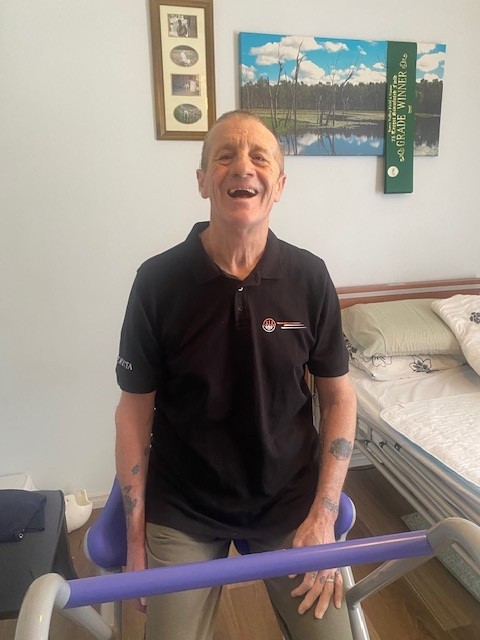
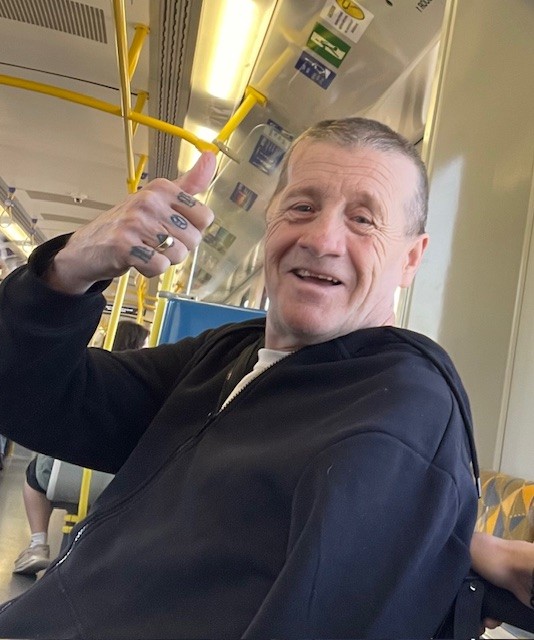
Today, Geoff has gained weight, can walk short distances using a stick and is continuing to adapt to life after his stroke.
“He seems very happy and at ease with his new life.”
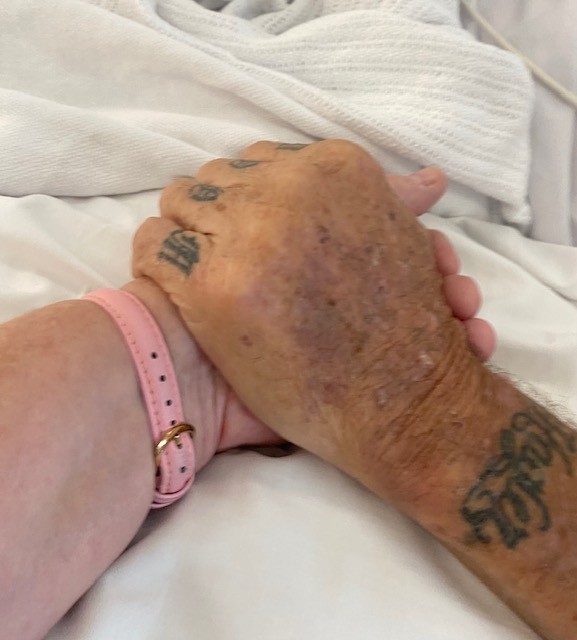
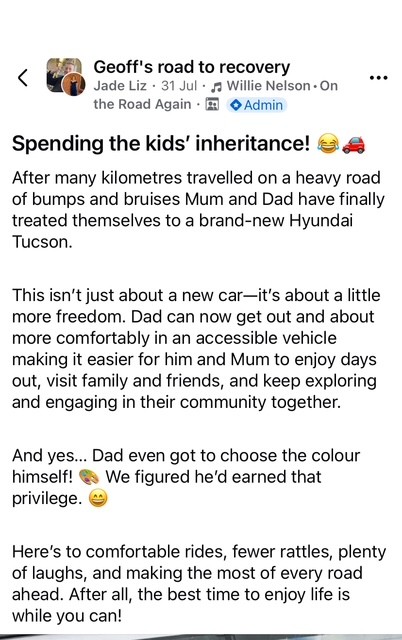
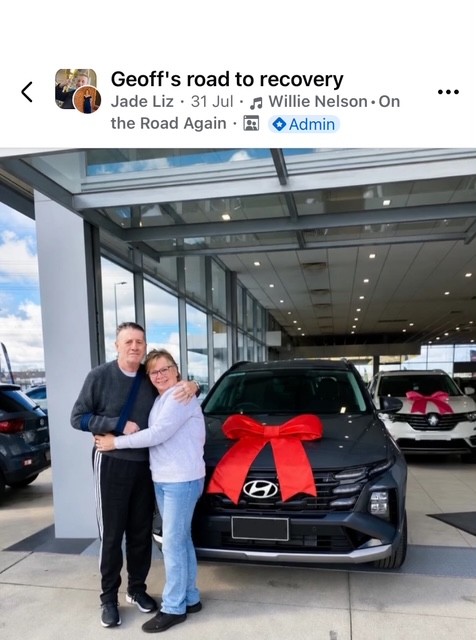
When Geoff had his stroke, the family's three children created a Facebook page called Geoff's Recovery to keep friends and family updated on his progress. Over time, it became a way of sharing both the challenges and the milestones along the journey. Reflecting on a special moment recently shared by their eldest daughter, Jade, Barbara says it was a reminder that recovery does not always look the way you expect, and that connection is not always expressed through words. “Things don’t always go the way you thought,” Barbara says. “You don’t always need words to know what someone is feeling.”
During the difficult days, Barbara found comfort in stories from other carers who reminded her that recovery takes time.
“I didn't really believe it,” she says. “Now I see it does take time and patience, and it does get better.”
Barbara’s message to other carers
Looking back, Barbara believes becoming a carer unexpectedly changes your life in an instant.
“Once you're put into the carer role unexpectedly, you kind of get a huge “grow up and get on with it” thought.”
Barbara is honest about the realities of caring.
“You will get feelings of anger, frustration and sadness.”
But she also speaks of the unexpected moments of joy.
“You may also get the hug you've been so longing for. That comes with the gift of the new life someone has received and the new adventures you'll all make together.”
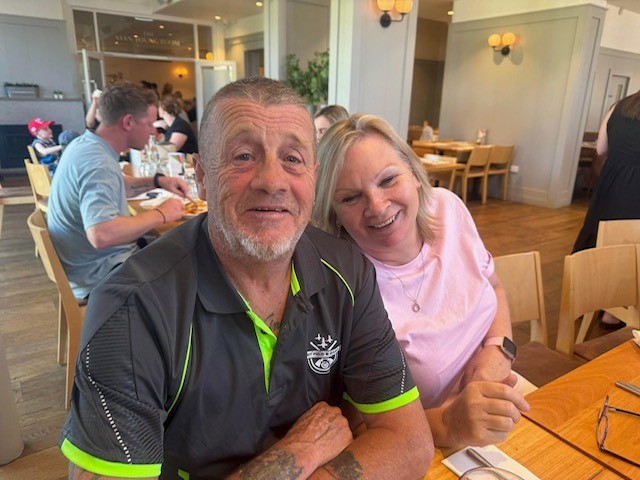
Above all, Barbara has learned to treasure the time she and Geoff share.
“After all, the best time to enjoy life is while you can.”
Help others understand the real impact of care for unpaid carers. Whether you’re a primary, secondary, former or young carer, your story matters - and we want to hear it!