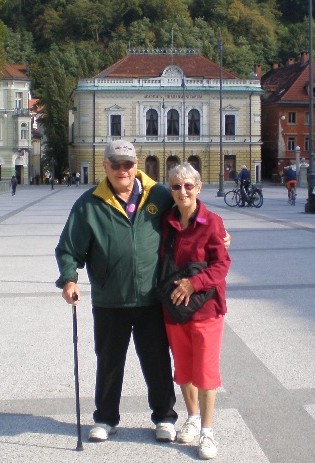
For almost 20 years, Lorraine Seeley has supported her husband Bruce through the life-changing effects of stroke, Parkinson's disease and vascular dementia.
After nearly two decades of being cared for at home, Bruce recently moved into residential care. What surprised Lorraine was how quickly official recognition of her caring role ended.
The day Bruce entered residential care, his Home Care Package ceased. Lorraine's Carer Allowance also stopped.
"I appreciated the support over the years, but I don't think people realise that the caring doesn't stop when someone enters care," she says.
Lorraine’s caring journey began unexpectedly in 2006 while she and Bruce were holidaying in Alaska.
"We were in Fairbanks when Bruce suffered a massive stroke in our hotel room," Lorraine recalls. "One minute we were enjoying our holiday, and the next our lives had changed forever."
Lorraine immediately called for help. Bruce was rushed to hospital before doctors arranged for him to be airlifted to Anchorage, where he could receive specialist treatment.
"It was frightening being so far from home," she says. "I remember making the call to our son and asking him to let his sisters know what had happened."
Bruce spent weeks in hospital and rehabilitation in Alaska before being flown back to Australia. After further treatment and six weeks at Royal Talbot Rehabilitation Centre, he began the long journey of recovery.
"He had to learn to speak, eat and walk again," Lorraine says. "The determination he showed during that time was incredible."
From holiday to hospital
The stroke changed life not only for Bruce, but for the whole family.
"From the moment Bruce had his stroke, I became the decision-maker for everything," Lorraine says. "I was managing appointments, finances, the household and his recovery all at once."
While Lorraine remained by Bruce's side, their children helped navigate insurance paperwork and legal arrangements from Australia. Once Bruce returned home, recovery became a family effort.
With support from health professionals, stroke support groups and carer organisations, Bruce gradually regained much of his independence. He returned to coaching junior athletes, reconnected with friends and even regained his driver's licence.
Rebuilding a life together
Although life looked different after the stroke, Lorraine and Bruce were determined not to let it define them.
"We travelled whenever we could," Lorraine says. "We joined Probus trips, visited Norfolk Island and the Cook Islands, and later enjoyed cruises together. We were determined to keep living our lives."
For many years, they did just that.
Bruce continued to work hard on his recovery, adapting to life after stroke while remaining involved in the activities and communities he loved.
"He never gave up," Lorraine says. "He was determined to get as much of his life back as he could."
When home was no longer enough
Over time, Lorraine began noticing changes in Bruce's mobility and memory.
"I was having to help him more and more, and everyday tasks were becoming harder for him," she says.
In 2023, Bruce was diagnosed with vascular dementia and Parkinson's disease.
As his condition progressed, Lorraine's caring responsibilities grew.
"Gradually, I was helping him get in and out of bed, shower, dress and move around safely," she says. "He started having falls more often and needed help with things he had always managed himself."
A Level 4 Home Care Package provided valuable support and helped Bruce remain at home for as long as possible. But by the end of 2025, his needs had become too great.
On New Year's Eve, Bruce experienced three serious falls, each requiring an ambulance call-out.
"After the final fall, the paramedics said Bruce needed to go to hospital," Lorraine recalls. "When our children arrived, we all knew what we had been avoiding. I could no longer keep him safe at home."
Bruce spent five weeks in hospital before moving into residential aged care in February 2026.
"I never imagined he wouldn't be at home with me," Lorraine says. "But caring sometimes means recognising when you can no longer do it alone."
The caring didn't stop
Although Bruce now lives in residential care, Lorraine remains deeply involved in his day-to-day life.
"The caring may look different now, but it hasn't ended," she says.
Lorraine continues to manage Bruce's finances, ensure accommodation fees are paid, purchase clothing and toiletries, organise specialist appointments, and help make important decisions about his care.
"There are still decisions to make," Lorraine says. "I'm still the person making sure everything is running smoothly for him."
She believes many families experience a similar transition when a loved one moves into residential care.
"People often assume that once someone moves into care, your role as a carer is finished," she says. "But that's not been my experience. I'm still involved every day, just in a different way."
Lorraine knows many other carers who feel the same.
"We may no longer be providing care at home, but we're still advocating, organising, visiting and looking after the people we love."
She hopes there can be greater recognition of the ongoing role carers play after a loved one enters residential care.
"Even if it was a smaller payment or some other form of support, it would acknowledge that caring continues in different ways," she says. "The caring doesn't stop just because someone enters care."
Still by his side
Looking back, Lorraine chooses not to focus on what has been lost, but on the life she and Bruce built together after that life-changing day in Alaska.
"For me, caring meant willingly giving my time and love to help make Bruce's life as comfortable and meaningful as possible," she says.
Although their circumstances have changed, her commitment has not.
"I still care about his wellbeing every day. I always will."
Reflecting on nearly two decades of caring, Lorraine hopes her story helps others understand that caring is about far more than physical support.
"Our life together wasn't always easy, but it was full of love, determination and wonderful memories," she says. "That's what I choose to hold onto."
Help others understand the real impact of care for unpaid carers. Whether you’re a primary, secondary, former or young carer, your story matters - and we want to hear it!