You may not think twice about the time it takes to drive someone to an appointment, help them complete paperwork, manage medications or adjust your work schedule to provide support.
 But over weeks, months and years, those responsibilities add up.
For many carers, the cost of caring extends far beyond money. It can affect employment, education, retirement savings, wellbeing and opportunities that are difficult to replace.
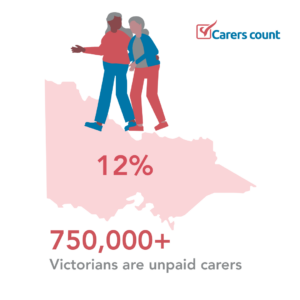
More than 750,000 Victorians provide unpaid care to a family member or friend. Their contribution supports people with disability, chronic illness, mental ill health, age-related conditions and other care needs. Without this support, many families and services would struggle to cope.
Yet caring often comes with significant personal, financial and career impacts that are rarely visible to others.
When caring affects household finances
Many carers face additional expenses as part of their caring role. Travel to appointments, parking fees, medication costs, equipment, specialised services and everyday living expenses can place pressure on household budgets. Research also shows that carers experience higher levels of financial stress than the broader population.
For some, these costs are made harder by reduced income. Caring responsibilities can limit the number of hours a person can work or make it difficult to remain in paid employment. In Victoria, around half of primary carers are not participating in paid work.
The financial effects can continue long after a caring role ends. Lower earnings, interrupted employment and reduced superannuation contributions can affect long-term financial security and retirement outcomes.
For many carers, earlier access to information and support could help reduce some of these pressures. Programs such as Carer Coaching and Step into Caring are designed to help carers connect with information and support sooner.
The impact on work and study
Caring can influence the decisions people make about education and employment.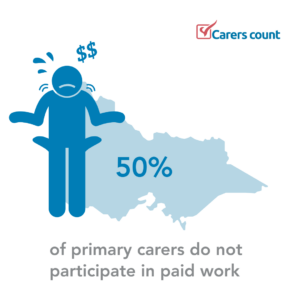
Many carers adjust their schedules, reduce working hours or decline opportunities that are difficult to balance alongside caring responsibilities. Young carers, in particular, may find it challenging to participate fully in education while supporting a family member. National research has found that carers experience poorer employment outcomes than people without caring responsibilities, and young carers often face barriers to further study and workforce participation.
These choices are often made out of necessity rather than preference. While carers continue to support those they care for, the impact on career development and future earning capacity can be significant.
More information about the experiences of Victorian carers is available here.
The everyday demands of caring
 The impact of caring is not measured in dollars alone.
Many carers spend considerable time coordinating appointments, managing services, providing emotional support, advocating for the person they care for and responding to changing needs.
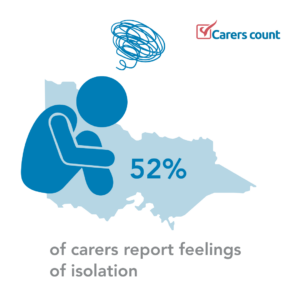
Research shows carers report higher levels of psychological distress and social isolation than non-carers. In Victoria, more than half of carers report feeling isolated, with caring responsibilities, time pressures and financial challenges contributing to this experience.
Many carers also describe difficulties finding information and support, particularly in the early stages of caring. Accessing the right assistance can take time and often requires navigating multiple systems and services.
Support groups, local activities and community connections can help carers feel less isolated and more connected. You can learn more about support available here.
A contribution that benefits everyone
While the costs of caring are often carried by individuals and families, the benefits are felt across the community.
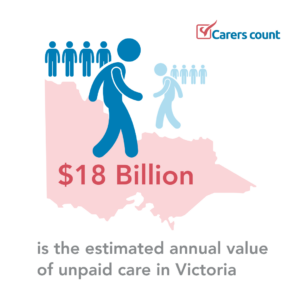
Carers Victoria estimates the value of unpaid care provided in Victoria at more than $18 billion each year, an amount comparable to what state and local governments spend on health care.
Nationally, Deloitte Access Economics estimated that replacing unpaid care with formal services would cost approximately $77.9 billion annually.
Without carers, demand for health, disability, aged care and community services would increase dramatically.
What the numbers don't show
Behind every statistic is a person balancing caring alongside work, study, family responsibilities and their own wellbeing.
For some, caring means putting career goals on hold. For others, it means stretching a household budget further, managing complex systems, or missing out on opportunities that many people take for granted.
No report, statistic or policy paper can fully capture the realities of caring.
Carers understand the financial pressures, the time commitments and the challenges that others may never see.
They know what support would make a difference.
They know where the gaps are.
And they know the practical changes that could make caring more manageable.
As Victoria prepares for the state election, decision-makers are listening to the issues their communities are raising. This is an opportunity for carers to help shape that conversation.
If you're a carer, your experience can help decision-makers better understand the real cost of caring and the support that would make a difference. Email your local MP and share your experience. We've made it easy with a pre-written message you can personalise and send in minutes.